
Your audience meets your brand before it meets you.
It happens on your website, in an email, on social media or in an advertisement. Before anyone reads the copy or talks to your team, they are already deciding what kind of brand you are. Graphic design shapes that decision by showing people what your brand values, how seriously you take your work and whether you are worth their attention.
That is why graphic design is important. It creates the first impression, builds recognition and makes your message easier to understand. When it is connected to a strong marketing strategy, it can also help people trust your brand and take action.
This article covers six reasons design matters to a business: first impressions, recognition and trust, clearer communication, standing apart from competitors, emotional connection, and measurable marketing results. It also covers what makes a design memorable and what it costs to skip design altogether. If you want help with any of it, check out VI's graphic design services.
What Is Graphic Design?
Graphic design is the intentional use of color, typography, imagery, layout and visual style to communicate an idea. It can show up in a logo, website, social media post, advertisement, presentation, brochure, package or video.
The format may change, but the goal stays the same. Good design helps the audience understand who you are, what you offer and why it matters.
Why Is Graphic Design Important? 6 Reasons It Matters
1. It Shapes the First Impression
A customer may see your website or social media profile before they ever speak with someone from your business. If the design feels dated, cluttered or inconsistent, that experience can create doubt before you have the chance to explain your value.
Strong design creates a different response. It can make a business feel confident, credible, current and easy to understand. It gives the audience a reason to keep looking.
The right design is not necessarily the loudest or most flashy. It is the design that makes sense for the people you need to reach. That is why designing for your target audience is such an important part of the creative process.
2. It Builds Recognition and Trust
A brand should not have to start over every time someone sees it. Consistent colors, typography, imagery and layouts help customers recognize the business across its website, social channels, emails, advertisements and printed materials.
That consistency creates familiarity, and familiarity builds trust. Your materials do not need to look exactly the same, but they should feel like they belong to the same brand.
A strong visual identity gives a business a recognizable point of view. It turns separate pieces of marketing into one connected experience.
3. It Makes Complicated Ideas Clearer
Some businesses have a lot to explain. Their services may be technical, their processes may involve several steps or their customers may need to understand a large amount of information before making a decision.
Design helps organize that information. A diagram can make a process easier to follow. An infographic can make statistics easier to understand. A strong presentation can turn a complicated recommendation into a story that holds an audience's attention.
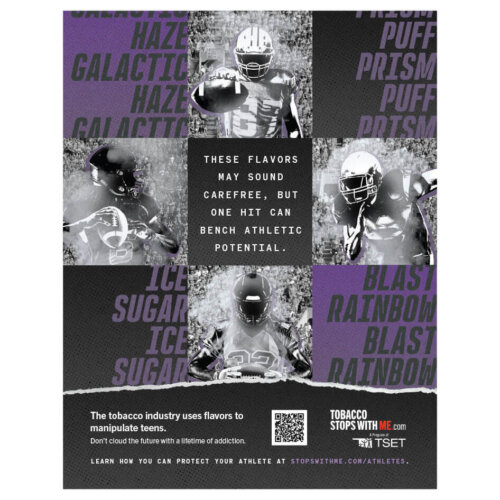
Here is what that looks like in practice. Research on how nicotine affects athletic performance is the kind of information most people will likely not read through. For an anti-vape education campaign aimed at coaches and parents, that research became a single black-and-white image of a student athlete, matched to the sport in season, with a QR code to the details. The complexity did not disappear. It moved to where someone would actually go looking for it.
Design does not replace good content. It gives the content structure and helps people find the point.
4. It Helps a Brand Stand Apart
Most businesses have access to the same design tools, templates and digital platforms. The advantage does not come from owning the software. It comes from knowing what the brand needs to say and how to say it in a way competitors cannot easily copy.
Strategic design can make a business more recognizable and give it a stronger position in a crowded market. When several competitors offer similar products or services, the brand that communicates with the most clarity and confidence has a better chance of earning consideration. Looking different for its own sake is not the goal. Making the difference matter to the audience is.
5. It Creates an Emotional Connection
People respond to how a brand makes them feel, and design plays a major role in that response. Color, typography, imagery and composition can make a brand feel bold, calm, trustworthy, playful or refined.
Those choices become more powerful when they support a larger brand story. Nike's swoosh suggests movement, which keeps a company built on athletic performance visually tied to that idea on every product it makes. The arrow hidden in the FedEx logo reinforces progress and speed, so a delivery company communicates its core promise without a word of copy.
A logo alone is not a brand story. A brand is built through every interaction a customer has with an organization, which is why a logo design process should start with research and positioning rather than sketches. Design helps those interactions feel connected and intentional.
6. It Supports Measurable Marketing Results
Design can influence what people do next. The design of an advertisement can affect whether someone stops to look. The layout of a landing page can influence whether a visitor understands the offer. The structure of an email can guide someone toward a call to action.
Those effects show up in numbers, not just impressions. The anti-vape print campaign above is a straightforward example. Coaches and parents who scanned the QR code stayed on the resource page for three minutes and eighteen seconds, which beat the target by 65 percent, and the page has drawn more than 158,000 users since June 2024. The design decisions, a single stark image and one clear action, are what produced that behavior.
That is why design should be connected to strategy from the beginning. At VI, strategists, copywriters, designers, digital specialists, media professionals, public relations experts and video producers work together to solve the same business challenge.
Strategy identifies the objective. Copy gives the message a voice. Design makes it visible. The rest of the agency helps deliver it to the right audience.
Creative Work That Has Been Judged by the Industry
Good design should not need a trophy to prove it works. But independent recognition does tell a business something useful, which is that people who judge creative work for a living rated it highly against thousands of other entries.
In 2024, VI earned 36 American Advertising Awards, including 12 Gold, across categories that ran from art direction and animation to integrated campaigns. The same year brought seven Telly Awards from a field of nearly 13,000 entries worldwide, followed in 2025 by five Heartland Emmy Awards.
What matters more than the count is what the work was for. Most of it came from Tobacco Stops With Me and Oklahoma Tourism and Recreation Department campaigns, which means the recognized work was built to get someone to quit smoking or plan a trip. That is design and creativity judged well by peers on campaigns that existed to change behavior, not to win anything.
What Makes a Graphic Design Memorable?
The most memorable design is clear, distinctive and connected to the brand. It does not force the audience to work through unnecessary clutter or guess what matters most.
Six things do most of the work:
- Hierarchy guides the eye to what matters first.
- Contrast creates emphasis and keeps the layout from flattening out.
- Color builds recognition and carries the emotional tone.
- Typography gives the brand personality without making the message hard to read.
- Imagery supports the idea rather than decorating around it.
- White space gives everything else room to be noticed.
Memorable design is simple enough to recognize quickly but different enough not to disappear among competitors. A useful test is whether someone could identify the brand without seeing its logo.
That test only works if the design holds up everywhere it appears, which is why it is worth thinking about your marketing collateral as one system rather than a stack of separate files.
The Cost of Skipping Good Design
The clearest way to see graphic design importance is to look at what happens without it. Design is rarely skipped on purpose. It gets postponed, handed to whoever has the software, or split across enough people that no one owns how the brand looks.
The results are predictable. Inconsistent branding makes a company look like several different companies, and customers who cannot tell whether they are in the right place tend to leave. Dated visuals quietly signal that a business has stopped investing in itself, and that impression forms before anyone reads a word about the quality of the work. Files built one at a time with no shared standards turn into a slow tax on every future project, because each new piece starts from scratch.
The expensive part is usually the cleanup. Rebuilding a visual identity after years of one-off decisions costs more than establishing it once and following it. None of this means a business needs to start over. It means the gap is worth finding before a customer finds it first.
Putting Graphic Design to Work
Graphic design is not the final layer added after the real marketing decisions have been made. It is part of how a brand communicates from the start.
When design works with strategy, copywriting, digital, media, public relations and video, it becomes more than a visual asset. It becomes part of a clear, connected experience that helps people understand the brand, trust it and remember it.
That is the real value of graphic design. It gives the brand a face, a voice and a better chance to be noticed for the right reasons.
Good design should have a reason behind every choice. If yours needs more intention, contact VI Marketing and Branding.
Frequently Asked Questions
Why is graphic design important for a small business?
A smaller business usually has fewer chances to make an impression, which makes each one count for more. Consistent, clear design lets a small company look as established as it actually is and removes the doubt a customer might otherwise resolve by choosing someone else.
What is the difference between graphic design and branding?
Branding is the strategy that covers what a company stands for, who it serves and how it wants to be understood. Graphic design is how that strategy becomes something people can see. Design without branding behind it produces attractive materials that do not add up to anything.
Does graphic design affect sales and conversions?
It affects the behavior that leads to them. Design determines whether an ad gets noticed, whether a landing page is understood and whether a call to action is obvious, all of which are measurable. Treat it as a variable to test rather than a matter of taste.
How often should a business update its graphic design?
There is no set schedule. Revisit it when the business changes what it does or who it serves, when materials no longer look like they belong together, or when the visual style reads as noticeably older than the company's actual work. A full rebrand is not always the answer. Often, the fix is a clear set of standards applied consistently.