Oklahoma Tobacco Settlement Endowment Trust

Each year, smoking claims the lives of approximately 7,500 Oklahomans and remains the leading cause of preventable death in the state, according to the Centers for Disease Control and Prevention. Beyond the human toll, tobacco use costs Oklahoma businesses an estimated $2.1 billion annually in lost productivity and contributes to $1.62 billion in healthcare costs, including $264 million paid by Medicaid. These preventable costs place a significant financial burden on employers, taxpayers, and families.
The Oklahoma Tobacco Helpline (OTH) was established through funds allocated to the Tobacco Settlement Endowment Trust (TSET) via the Master Settlement Agreement. Since 2003, the Helpline has supported more than 600,000 registrations, using a mix of traditional and non-traditional media to educate and encourage tobacco users to make a quit attempt.
One of TSET’s core goals is to improve health outcomes, well-being, and economic opportunity for Oklahomans by preventing and reducing tobacco use and obesity. As part of this mission, TSET aims to reduce adult smoking prevalence in Oklahoma from 19.1% to 13.4% by FY26.
To reach tobacco users and motivate them not only to consider quitting but to seek assistance, VI and OTH grounded its strategy in an understanding of the tobacco user mindset. Research and experience showed that simply listing health risks would not resonate with this audience. Instead, the campaign needed to show, not tell by using real, relatable stories and emotionally resonant messaging to inspire action.
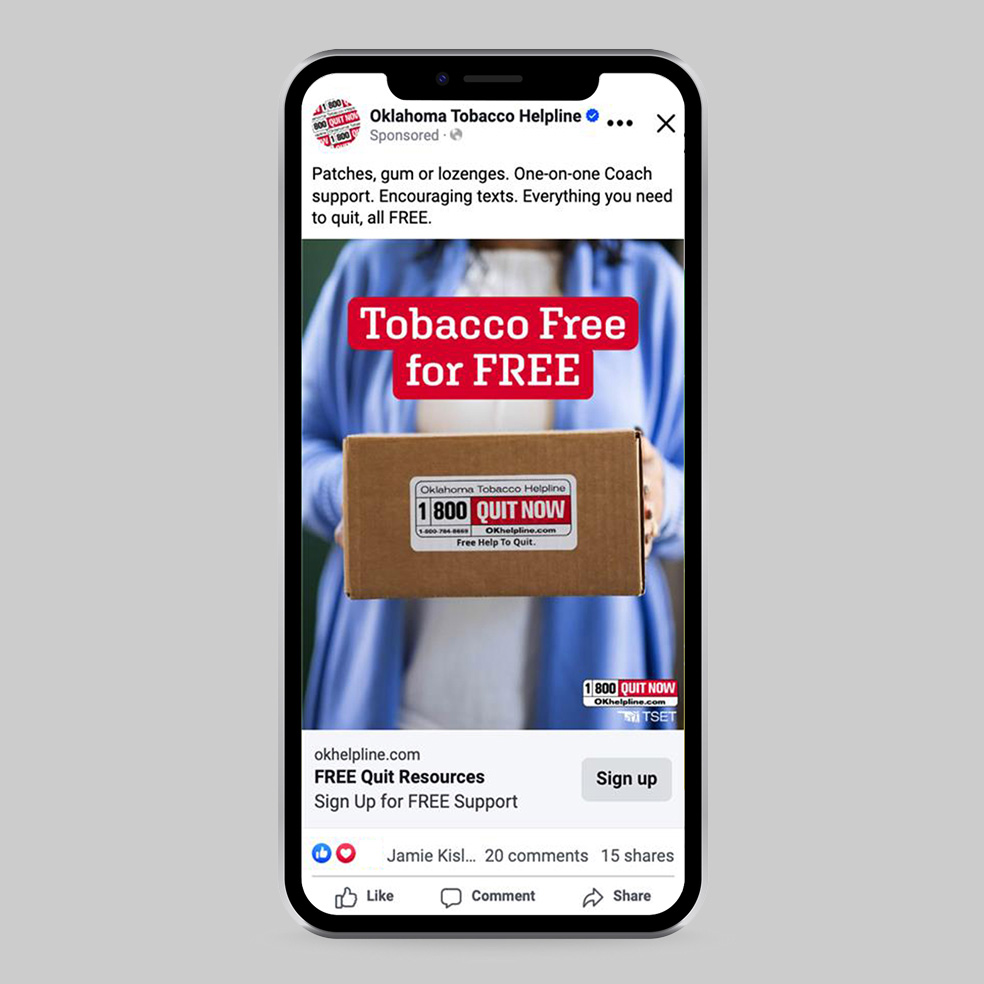
With this insight, VI developed an OTH Testimonial campaign designed to empower tobacco users to find their strength and remind them that free support and resources are available through the Helpline. The campaign was delivered through an integrated mix of TV, cable, radio, digital, and social media platforms.
Success was measured by the campaign’s ability to direct Oklahomans to the Helpline. The primary objective is to increase the average number of Helpline registrations by 5% during Testimonial campaign flights. This objective directly supports TSET’s broader goal of reducing smoking prevalence statewide.

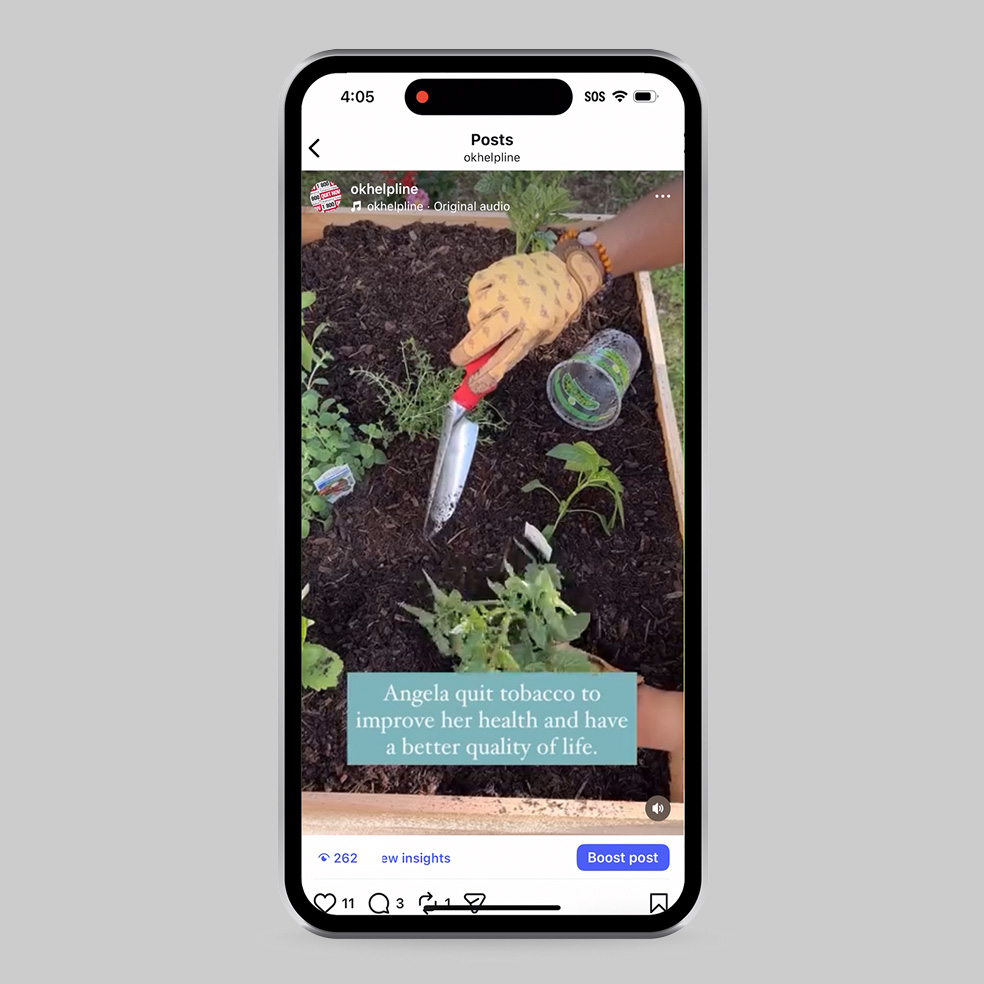
As part of the Testimonial campaign, OTH featured Angela Razor, a 50-year-old Oklahoman who successfully quit smoking in 2022. Angela began smoking around age 30 during a period of intense stress. Over time, her sister, who is a nurse, encouraged her to contact the Helpline. Through the program, Angela received quit coaching and nicotine replacement therapy and ultimately credited Chantix as the tool that helped her quit for good.
Angela’s testimonial highlighted her personal journey into and out of tobacco use, emphasizing the importance of family support, particularly her relationships with her sister and children. The story explored her roles as both a mother and a sister, her reasons for starting to smoke later in life, and the motivations that ultimately led her to quit.
Because individuals often struggle to remember their reasons for quitting when cravings and triggers arise, the testimonial underscored the critical role of ongoing support. By telling Angela’s story in her own words, the campaign demonstrated the real-world impact of the Helpline’s free services and encouraged others to enroll for help.
The primary audience for the campaign included Oklahomans ages 25–64 who use tobacco, with particular attention to populations where tobacco use is highest, including individuals with lower levels of education and income. Secondary audiences included health care providers, employers promoting healthier workplaces, individuals supporting loved ones in quitting, and former tobacco users working to remain tobacco-free.
In addition to broad statewide messaging, tailored creative was developed for priority populations, including SoonerCare (Oklahoma Medicaid) members, Native Americans, pregnant women, males, and smokeless tobacco users.
The campaign was executed through a robust mix of paid, earned, owned, and organic media, supported by public relations, partnerships, and website integration. Paid media tactics included:
The primary objective of the Testimonial campaign was to increase the average number of Helpline registrations by 5% during campaign flights. Results to date indicate the campaign is on track to meet this goal by the end of the fiscal year as remaining flights conclude.
While in flight, the campaign has driven a 3% increase in average Helpline registrations, with an average of 458 weekly registrations, compared to 449 weekly registrations during periods when the campaign was not live. This upward trend demonstrates measurable progress toward the overall objective.
Campaign performance data further reinforces the effectiveness of the creative and media strategy. The Angela Testimonial creative generated 11,786 sign-up initiations across all digital and social campaigns and tactics, exceeding the objective of 9,854 initiations by 20%. Cost efficiency was particularly strong in lower-funnel environments, with Google Demand Gen and Meta Website Click ads consistently outperforming CPA benchmarks, indicating effective conversion of interest into action.
Upper-funnel awareness efforts also met and exceeded expectations. Over-the-Top (OTT) Video achieved a 98% video completion rate, surpassing the 95% benchmark and signaling strong engagement and message retention.
Overall, these results demonstrate that empathetic, authentic storytelling rooted in real experiences effectively drives both awareness and Helpline engagement. The Testimonial campaign supports increased quit attempts, improved public health outcomes, and meaningful progress toward reducing smoking prevalence in Oklahoma.